A lavender monograph for the home
Latin Name: Lavandula angustifolia
Common Names: lavender, English lavender, common lavender, French lavender
Family name: Lamiaceae
Part(s) of the plant used: most commonly used parts are the leaves, petals, and flowering tips. Essential oil is also made from the fragrant flowers.
Native region and environment: lavender can be found in “dry grassy slopes amongst rocks, in exposed, usually parched, hot rocky situations often on calcareous soils.”[1] Its native range is across Europe and the Mediterranean.
This lavender monograph provides basic information about lavender—common names, usefulness and safety, and resources for more information. Browse more herbal monographs.
BasicsResearchResultsDosingSafetyWildcraftingReferencesPubMed
History of lavender use
Lavender has a long and storied history of use in both Spain and Morocco. One of the most famous physician-botanists, from Islamic history, Ibn al-Baytar wrote about its use in the early 1200s. Lavender has been used for traumatic injuries, nervous system, mental illness, rheumatism, and cough/cold systems.[2] Lavender was also being used in medieval Europe as one of the ingredients of the ‘Four Thieves’ Vinegar’ to protect against the plague. It was one of the first garden plants brought to the new world by early English settlers. Lavender can be used “to dry up the moisture of a cold braine”, where it is “especially good use for all griefes and paines of the head and brain.”[3] Pliny the elder, the famous monk, mentioned that Lavandula stoechas was used in powdered form for coughs, sciatica, and vertebrae pain. During the Civil War, a simple oil of Lavandula was used for dressing wounds of soldiers. The flowers of Lavandula stoechas were used medicinally until about the middle of the eighteenth century when it fell out of use.
Lavender constituents & diabetes
Although it is not typically listed as an antidiabetic or hypoglycemic herb, lavender is a great herb friend for people living with T2DM. Lavender contains phytochemicals such as monoterpene essential oils, tannins, coumarins, and flavonoids which influence the body in a number of ways. According to Dr. Duke’s Phytochemical Database there are more than 81 active phytochemicals found in Lavandula spp![4] The monoterpenes (linalool, linalyl acetate, and camphor) give us that wonderful lavender scent and are often expressed in aromatherapy. Due to the high level of monoterpene alcohols in the essential oil, caution should be used with direct contact of the essential oil to skin.
There are several in vitro and in vivo (in diabetic rats) studies which demonstrate antidiabetic effects and moderation of blood sugar levels[5]. Lavender is also wonderful companion herb for its sedative and stress-reduction properties. It can be used as a sleep aide which is incredibly important for those managing their health with diabetes. Finally, lavender can be added to pain relief formulas which may be helpful for people suffering from painful diabetic neuropathy.
Flavonoids found in lavender, like luteolin, have the ability to induce human protective enzyme systems which provide protective effects against many infectious bacterial and viral diseases and degenerative diseases such as cardiovascular diseases, cancers, and other age-related issues. One in vitro study concluded that the “oxygen containing monoterpenes” were responsible for disrupting and killing the fungus Candida albicans.[6]
Lavender Preparation & Dosing *
*Always check with your doctor before taking any alternative therapy.
Dried lavender flower buds and essential oil are readily available at many local stores. If you are interested in working with a tincture of lavender, I would recommend you buy this product from a trusted supplier like Mountain Rose Herbs.
| Daily Dosage Table: Lavender[8] | ||
| Format | Dosage | Preparation |
| Infusion | 1.5g | Steep dried flowers in 8oz boiling water for 10 minutes |
| Tincture | 2-4mL (40-80 drops) | 1:5 (lavender : alcohol) 50% proof |
| Aromatherapy[9] | 0.5–0.2mL (2-4 drops) | Essential oil in carrier oil or water |
| Topical Bath | 85-170grams (1/4 - 1/2 Cup) dried flowers | Prepare a sachet for a full hot bath |
Lavender Safety
With a safety rating of 1 and interaction class A, lavender is generally a safe herb to take—even for children and pregnant women. One hundred and fifty years ago, it was known as “the child’s stimulant.”[7] The American Herbal Product Association’s Botanical Safety Handbook (2nd ed.) lists no contraindications, other precautions, or drug-herb interactions; as also reported in the monograph on lavender oil published by the European Medicines Agency. They both note that there is a risk of allergic reaction through contact dermatitis in rare cases. Because it is considered safe, it is ok for long-term use.
Potential Drug Interactions
None reported.
Lavender WildCrafting
Lavender is found in “dry grassy slopes amongst rocks, in exposed, usually parched, hot rocky situations often on calcareous soils” (Plants for a Future, 2017). Lavender blooms in mid summer, depending on location. Its best to pick lavender when the buds are just starting to open, before the bees have done their business! The square stalks are best cut close to the base. Lavender is typically dried out before you process it in any way. Hang the stalks upside down for 2-4 weeks until the stalk snaps when bent. You can hang inside of a paper bag, to catch the flower buds that easily fall out.
One fun thing that you can make with fresh lavender flowers is lavender honey! Simply rough chop the flowers into a glass mason jar. Cover with good quality organic honey. Store in a cool, dark place for 4+ weeks. Shake jar occasionally and strain before using.
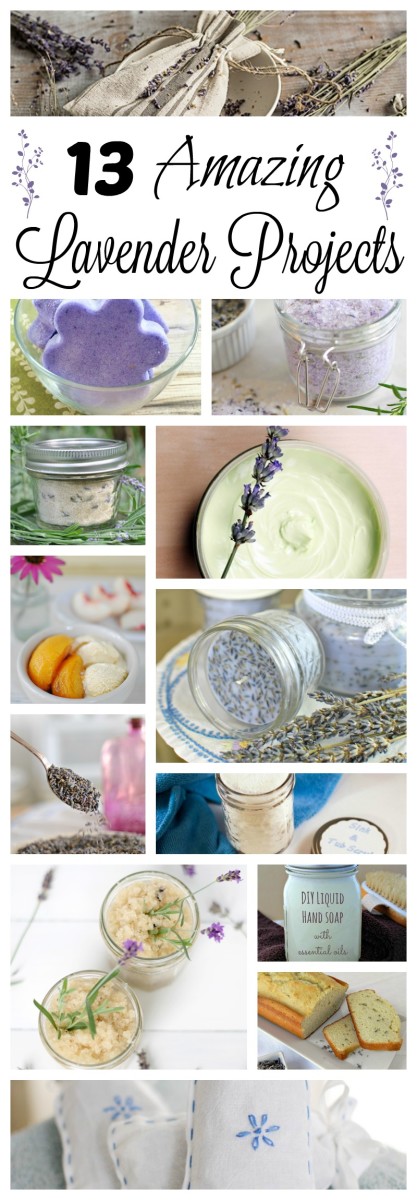
- https://town-n-country-living.com/13-diy-lavender-projects-youll-love.html
- How to cook with lavender
- 10 things to make with lavender
- 33 DIY ideas with lavender
- Harvesting lavender and how to use it
Lavender References
[1] Plants for a Future, 2017
[1] El-Gharbaoui ,A., Benítez G., González-Tejero, M.R., Molero-Mesa, J., Merzouki, A. (2017) Comparison of Lamiaceae medicinal uses in eastern Morocco and eastern Andalusia and in Ibn al-Baytar’s Compendium of Simple Medicaments (13th century CE). Journal of Ethnopharmacology 202, 208–224.
[2] Rohde, Eleanour Sinclair (1922) Old English herbals, para. 112. Retrieved January 28, 2018 from https://www.gutenberg.org/files/33654/33654-h/33654-h.htm#FNanchor_112_112
[4] https://phytochem.nal.usda.gov/phytochem/search
[5] Sebai H, Selmi S, Rtibi K, Souli A, Gharbi N, Sakly M. Lavender (Lavandula stoechas L.) essential oils attenuate hyperglycemia and protect against oxidative stress in alloxan-induced diabetic rats. Lipids Health Dis. 2013 Dec 28;12:189. doi: 10.1186/1476-511X-12-189. PMID: 24373672; PMCID: PMC3880178.
[6] Di Sotto A, Mazzanti G, Carbone F, Hrelia P, & Maffei F. (2011) Genotoxicity of lavender oil, linalyl acetate, and linalool on human lymphocytes in vitro. Environ Mol Mutagen. 52(1):69-71.doi: 10.1002/em.20587.
[7] Scudder, (1870) Specific medication and specific medicines. Cincinnati, OH: Wilstach, Baldwin& Co. Retrieved on Feb 7, 2017 from https://www.henriettes-herb.com/eclectic/specmed/lavandula.html
[8] Braun & Cohen (2015) Herbs & Natural Supplements Vol 2. , Elsevier, Sydney Australia