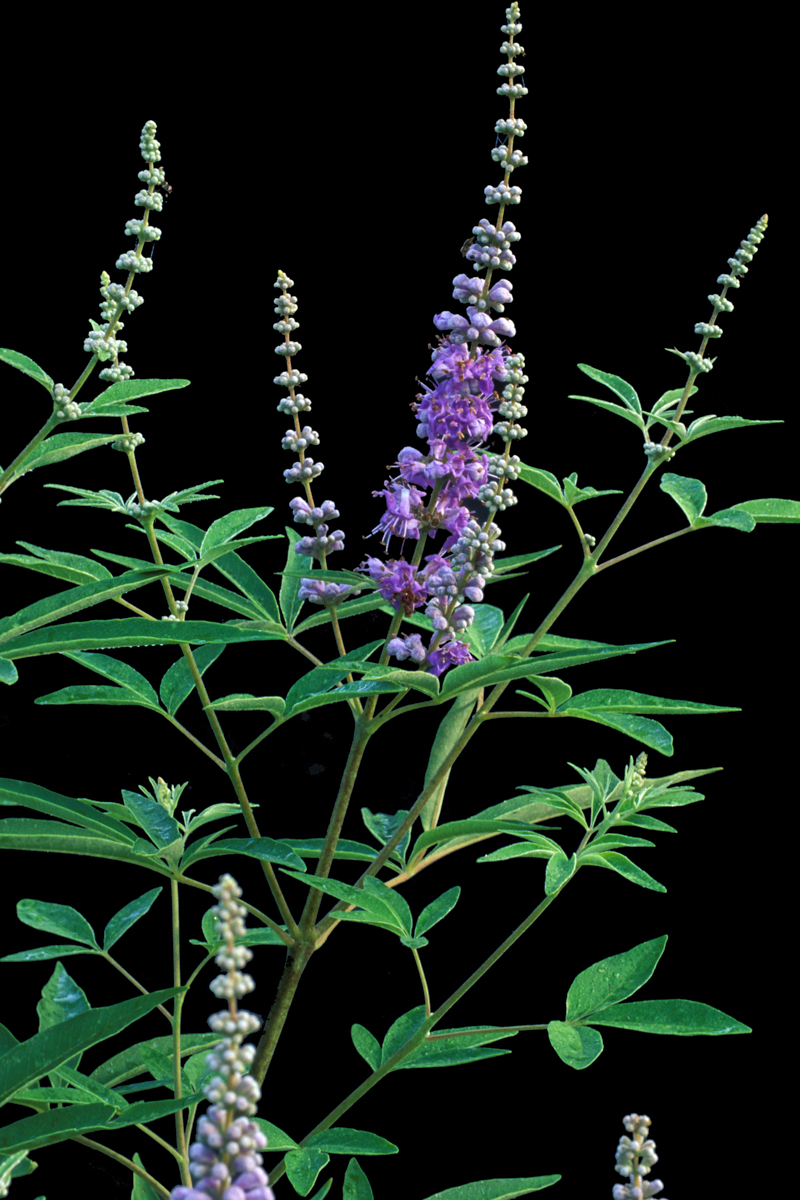
A chasteberry monograph for the home
Latin Name: Vitex agnus-castus
Common Names: chasteberry, chastetree, chaste tree berry, Vitex, monk’s pepper, lilac chastetree
This chasteberry monograph provides basic information about chasteberry—common names, usefulness and safety, and resources for more information.
Source: https://nccih.nih.gov/
BasicsResearchResultsDosingSafetyWildcraftingReferencesPubMed
Chasteberry Basics
- Chasteberry is the fruit of the chaste tree, which is native to Central Asia and the Mediterranean region.
- The plant was believed to promote chastity (hence its name). Monks in the Middle Ages reportedly used it to decrease sexual desire.
- Chasteberry was also used for reproductive disorders.
- Today, chasteberry is used as a dietary supplement for menstrual problems, menopause symptoms, infertility, and other conditions.
- Chasteberry is available as a liquid extract, capsules, tablets, and an essential oil.
Chasteberry in Health Research
- There’s not a lot of strong research on the effectiveness of chasteberry for any condition. We do have some clear safety information on the herb.
Chasteberry Research Summary
- A few preliminary studies found that chasteberry may improve some symptoms of premenstrual syndrome but the evidence isn’t firm.
- Researchers have studied chasteberry for breast pain and infertility, but there isn’t enough reliable scientific evidence to know if it helps.
- There’s no evidence that chasteberry helps with menopausal symptoms.
Chasteberry Safety
- When used in limited amounts, chasteberry appears to be generally well tolerated. Few side effects have been reported.
- Women on birth control pills or hormone replacement therapy, or who have a hormone-sensitive condition (such as breast cancer) should not use chasteberry.
- People taking dopamine-related medications, such as certain antipsychotic drugs and Parkinson’s disease medications should avoid using chasteberry.
Chasteberry References
- Chasteberry. Natural Medicines Web site. Accessed at naturalmedicines.therapeuticresearch.com/ on March 25, 2015. [Database subscription].
- Daniele C, Thompson Coon J, Pittler MH, et al. Vitex agnus castus: a systematic review of adverse events. Drug Safety.
- 2005;28(4):319-332.
- Dante G, Facchinetti F. Herbal treatments for alleviating premenstrual symptoms: a systematic review. Journal of Psychosomatic Obstetrics & Gynecology. 2011;32(1):42-51.
- Laakmann E, Grajecki D, Doege K, et al. Efficacy of Cimicifuga racemosa, Hypericum perforatum and Agnus castus in the treatment of climacteric complaints: a systematic review. Gynecological Endocrinology. 2012;28(9):703-709.
- Mahady GB, Michel JL, Soni KK. Chaste Tree. In: Coates PM, Betz JM, Blackman MR, et al., eds. Encyclopedia of Dietary Supplements. 2nd ed. New York, NY: Informa Healthcare; 2010:129-135.
- van Die MD, Burger HG, Bone KM, et al. Hypericum perforatum with Vitex agnus-castus in menopausal symptoms: a randomized, controlled trial. Menopause. 2009;16(1):156-163.