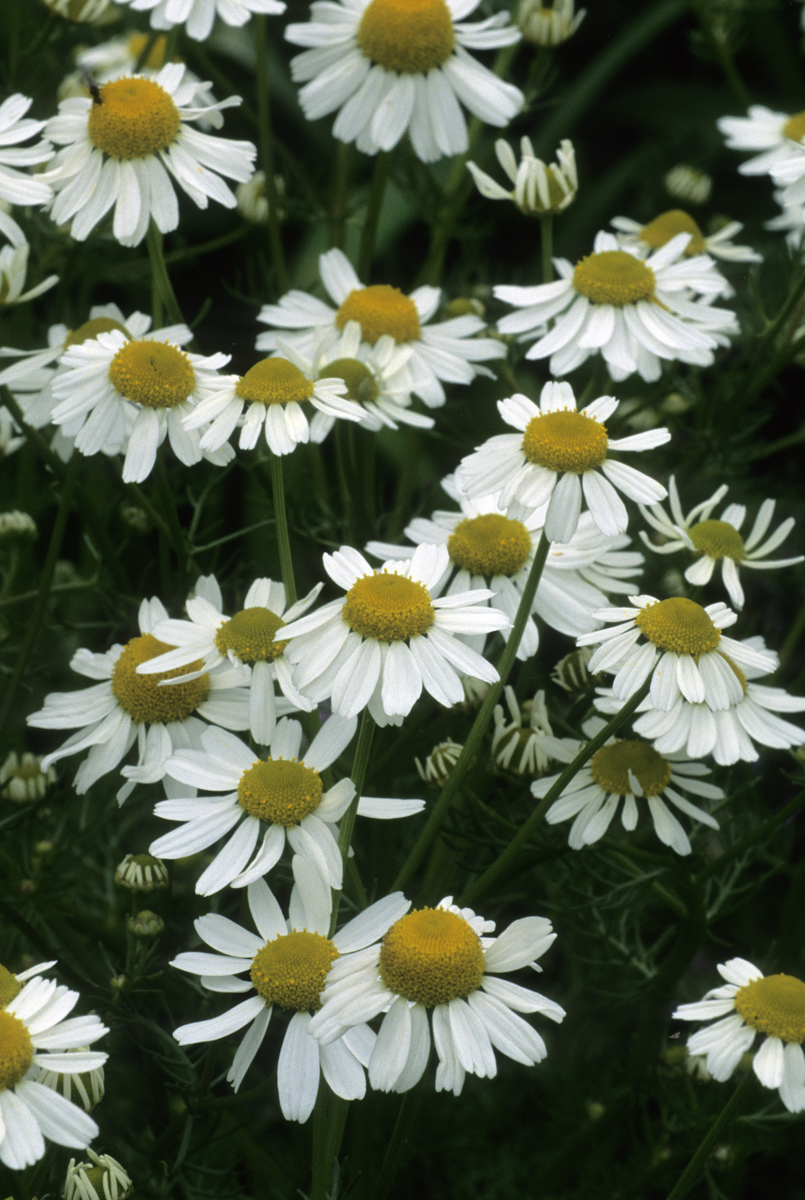
A chamomile monograph for the home
Latin Name: Matricaria recutita, Chamomilla recutita
Common Names: chamomile, German chamomile
This chamomile monograph provides basic information about chamomile—common names, usefulness and safety, and resources for more information.
Source: https://nccih.nih.gov/
BasicsResearchResultsDosingSafetyWildcraftingReferencesPubMed
Chamomile Basics
- There are two types of chamomile: German chamomile and Roman chamomile. This fact sheet focuses on German chamomile.
- Chamomile was described in ancient medical writings and was an important medicinal herb in ancient Egypt, Greece, and Rome.
- Today, chamomile is used as a dietary supplement for sleeplessness, anxiety, and gastrointestinal conditions such as upset stomach, gas, and diarrhea. It is also used topically for skin conditions and for mouth sores resulting from cancer treatment.
- The flowering tops of the chamomile plant are used to make teas, liquid extracts, capsules, or tablets. The herb can also be applied to the skin as a cream or an ointment, or used as a mouth rinse.
Chamomile in Health Research
- Not much is known about the health effects of chamomile because it has not been well studied in people.
Chamomile Research Summary
- Some preliminary studies suggest that a chamomile dietary supplement might be helpful for generalized anxiety disorder.
- Some research has found that products containing certain combinations of herbs that include chamomile may be of benefit for upset stomach, for diarrhea in children, and for infants with colic. But chamomile alone has not been shown to be helpful for these conditions.
Chamomile Safety
- There have been reports of allergic reactions, including rare cases of anaphylaxis (a life-threatening allergic reaction), in people who have consumed or come into contact with chamomile products.
- People are more likely to experience allergic reactions to chamomile if they’re allergic to related plants such as ragweed, chrysanthemums, marigolds, or daisies.
- Interactions between chamomile and cyclosporine (a drug used to prevent rejection of organ transplants) and warfarin (a blood thinner) have been reported, and there are theoretical reasons to suspect that chamomile might interact with other drugs as well. Talk to your health care provider before taking chamomile if you’re taking any type of medicine.
Chamomile References
- Amsterdam JD, Li Y, Soeller I, et al. A randomized, double-blind, placebo-controlled trial of oral Marticaria recutita (chamomile) extract therapy of generalized anxiety disorder. Journal of Clinical Psychopharmacology. 2009;29(4):378-382.
- Chamomile flower, German. In: Blumenthal M, Goldberg A, Brinckmann J, eds. Herbal Medicine: Expanded Commission E Monographs. Newton, MA: Integrative Medicine Communications; 2000:57-61.
- Gardiner P. Complementary, holistic, and integrative medicine: chamomile. Pediatrics in Review. 2007;28(4):e16-e18.
- German chamomile. Natural Medicines Web site. Accessed at naturalmedicines.therapeuticresearch.com/ on April 2, 2015. [Database subscription].
- Srivastava JK, Shankar E, Gupta S. Chamomile: a herbal medicine of the past with bright future. Molecular Medicine Reports. 2010;3(6):895-901.